Skip to content

Sylvia Schwenk, Multidisciplinary visual artist

Working across painting, sculpture, performance, drawing, and film

Sylvia Schwenk finds the extraordinary in ordinary life. Working across painting, sculpture, performance, and drawing, she transforms everyday gestures and routines into work that is thought-provoking and sometimes quietly humorous. Her paintings and sculptures are held in public collections in Australia, Germany, and the United States. Works are available to collect, and exhibition enquiries are welcome.

Featured Projects

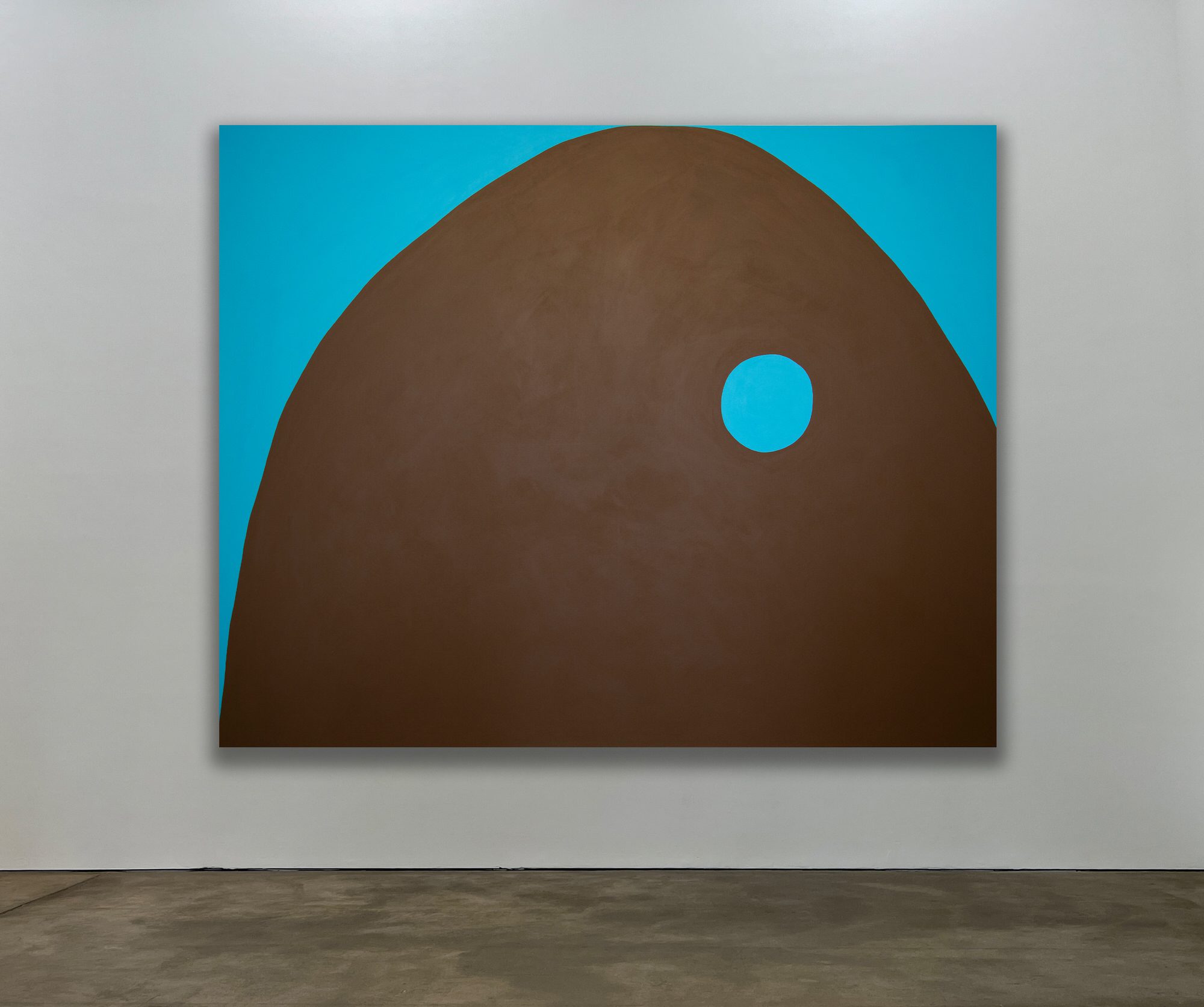
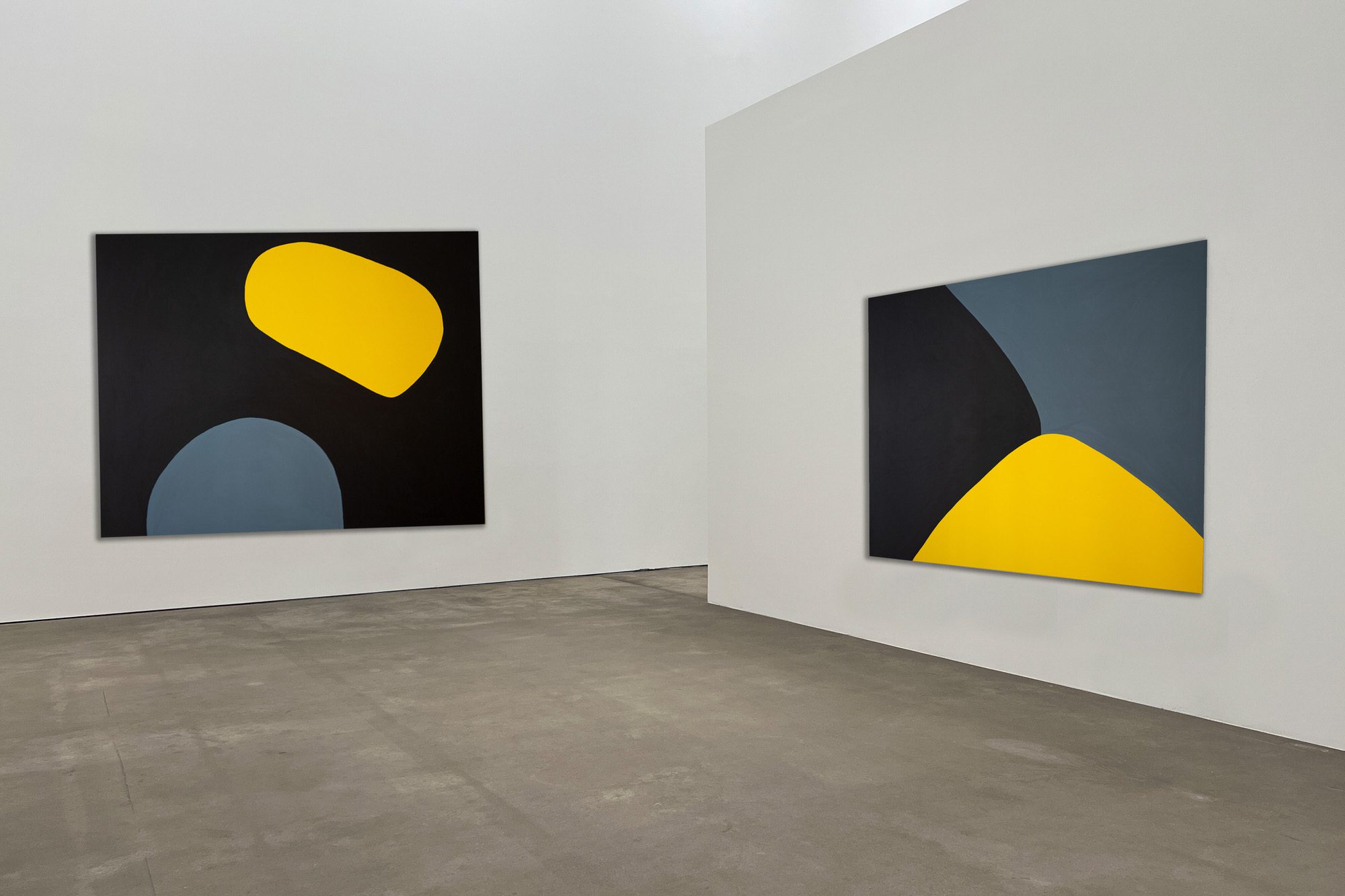
your thoughts become your world

An ongoing series of abstract paintings organised around seasonal palettes and temporal rhythms. Through repeated shapes, inversions, and subtle variations, connections unfold across the works. Colour and form shift gradually, making perception an active, meditative process. Works on paper and large-scale paintings on canvas are available individually or as curated groups.
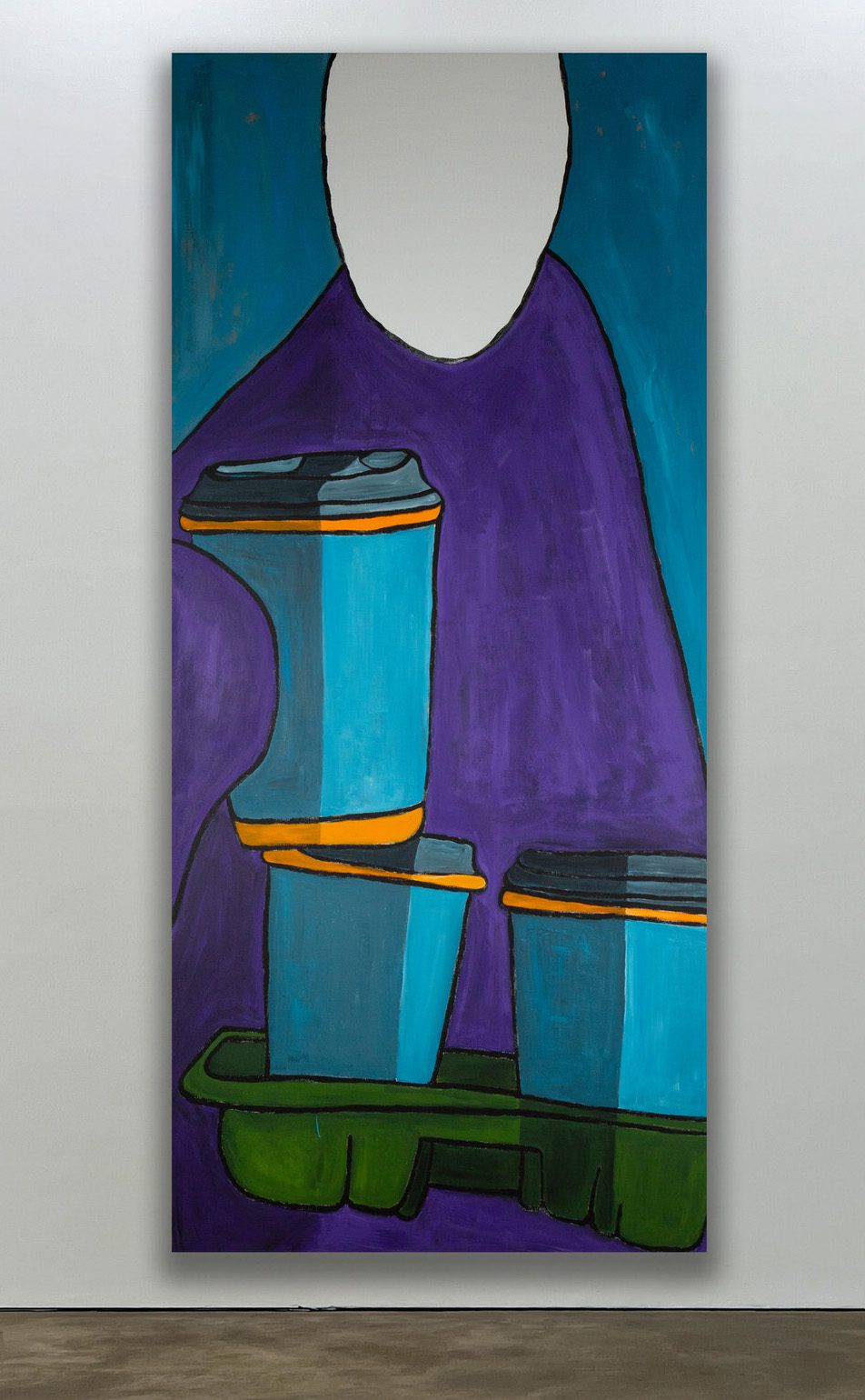
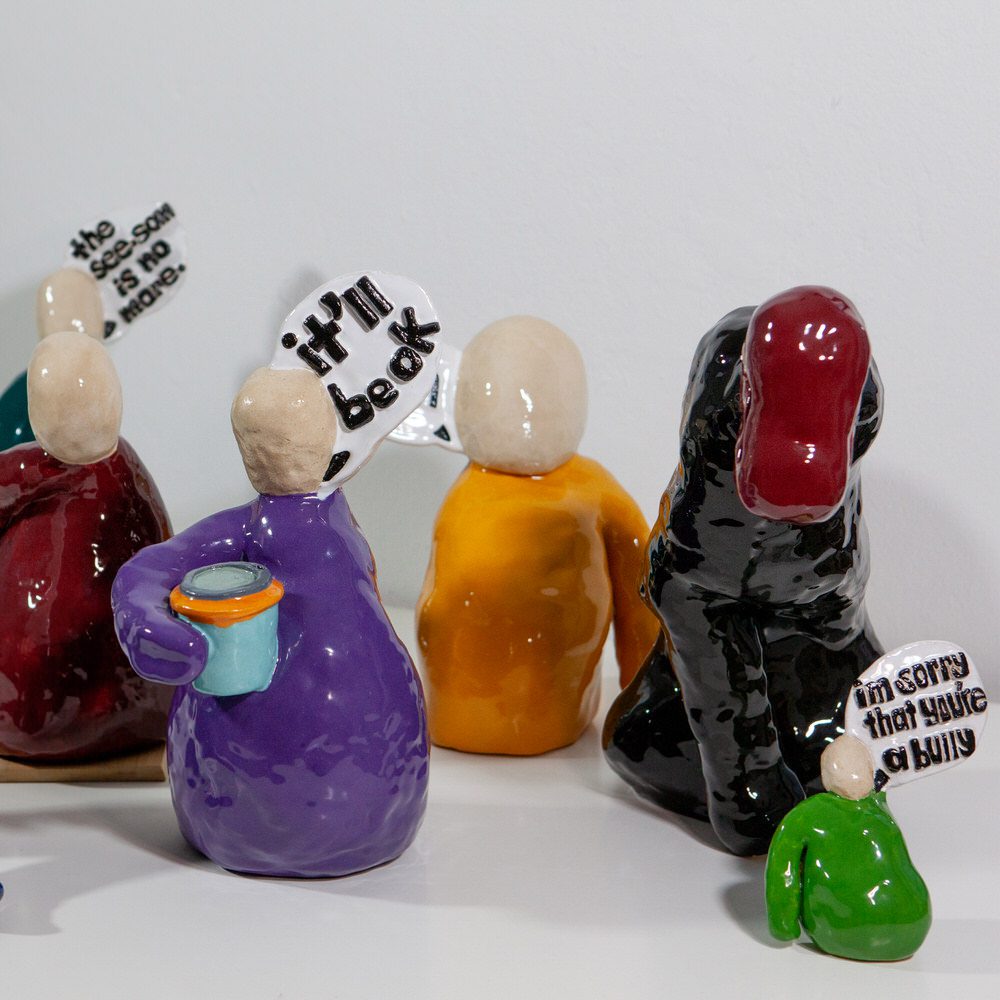
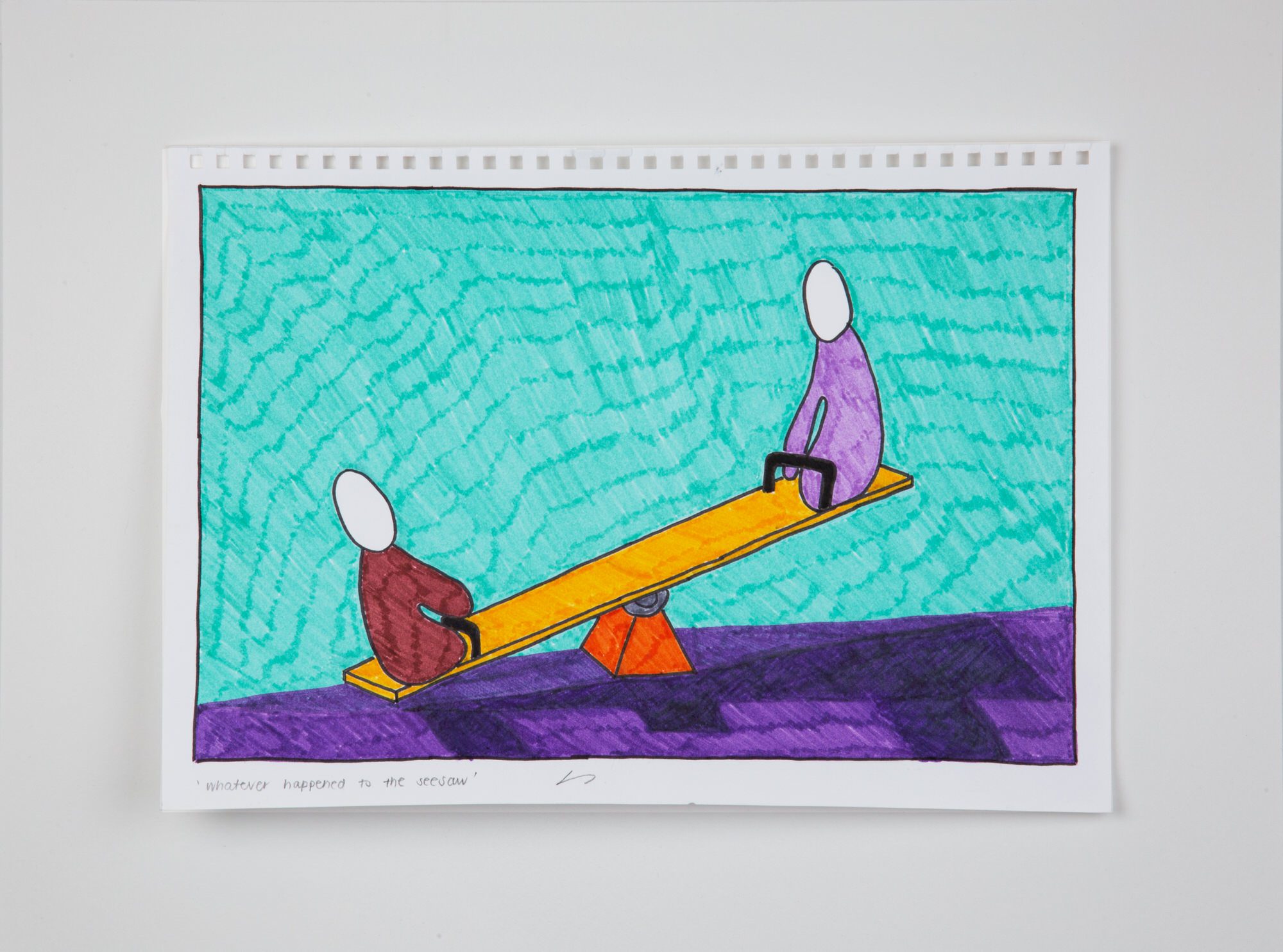
absurdity

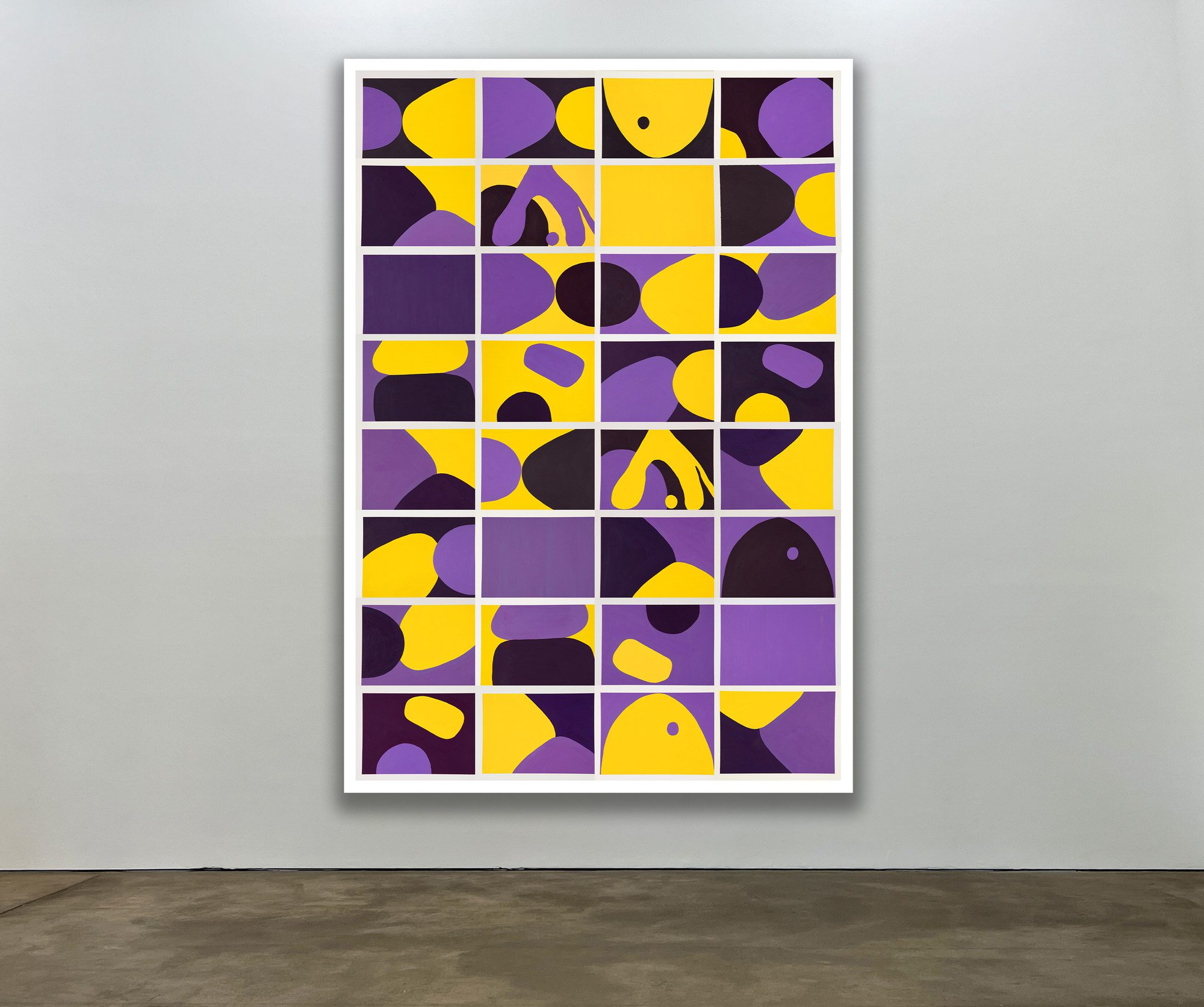
absurdity draws on true events from a six-month attachment to a Federal Government Taskforce. Across ceramic sculptures, paintings, drawings, and illustrated short stories, it examines how people navigate rigid systems and structures of control. The work is comical and unsettling in equal measure, using play and simplification to reveal what is at stake in institutional life.

More Projects
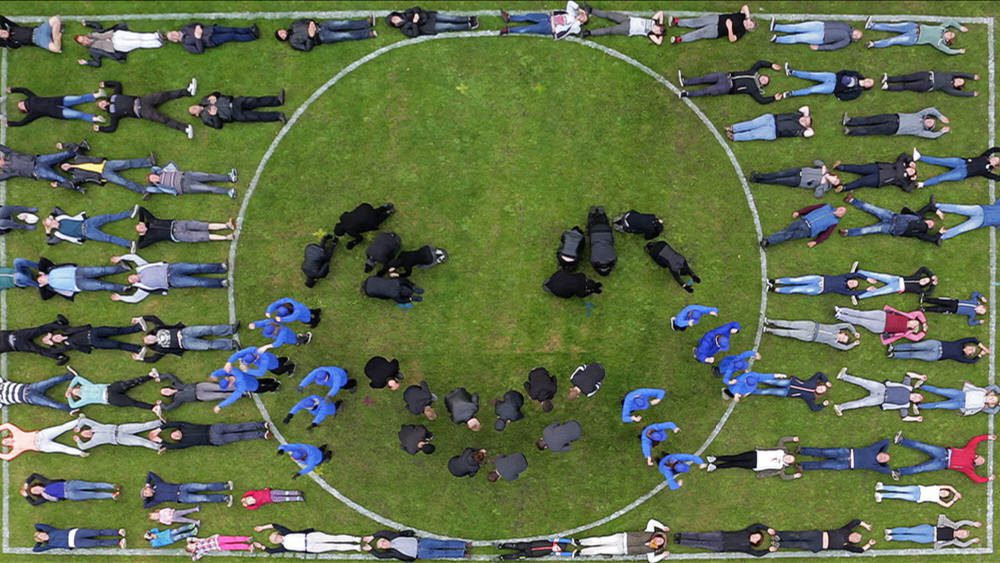
Films / Performance ArtThe library of emoji art is a large-scale community-based public art project that showcases emoji art created by communities around the world, at different times and in response to different topics. Every work of emoji art is a site-specific work of socially engaged performance art, that reflects the identity of the participating city and community. For every performance, Schwenk brings hundreds of people from the community together to connect, and communicate with each other in the physical world as they create large-scale emojis using their bodies. The emoji is designed by the community in a workshop(s) and is then presented as a work of performance art with the bodies of the participants who come from all areas of life such as aged care homes, schools, fire brigades, police, church groups, businesses, music groups and sports groups. To connect individual projects across the world, Schwenk pairs every performance of emoji-art with the performance of one of the most popular emojis of the year. emoji-art performances are fun, eye-catching and full of movement. The participants bring emojis to life with their bodies as they stand, sit, kneel, walk, march their arms, laugh and/or lay on the ground. Emojis are now an essential part of communication in our media driven age. Creating analogue versions of these digital icons helps counter isolation and makes it easier to connect with one another in the physical world emoji art lives on after the performance for the performers and others to enjoy. GIFs and photographs of the emoji art performances, together with drawings from the workshops, and archive material such as radio programs, social media posts, are deposited into the library of emoji art. Enquire about this work [...]
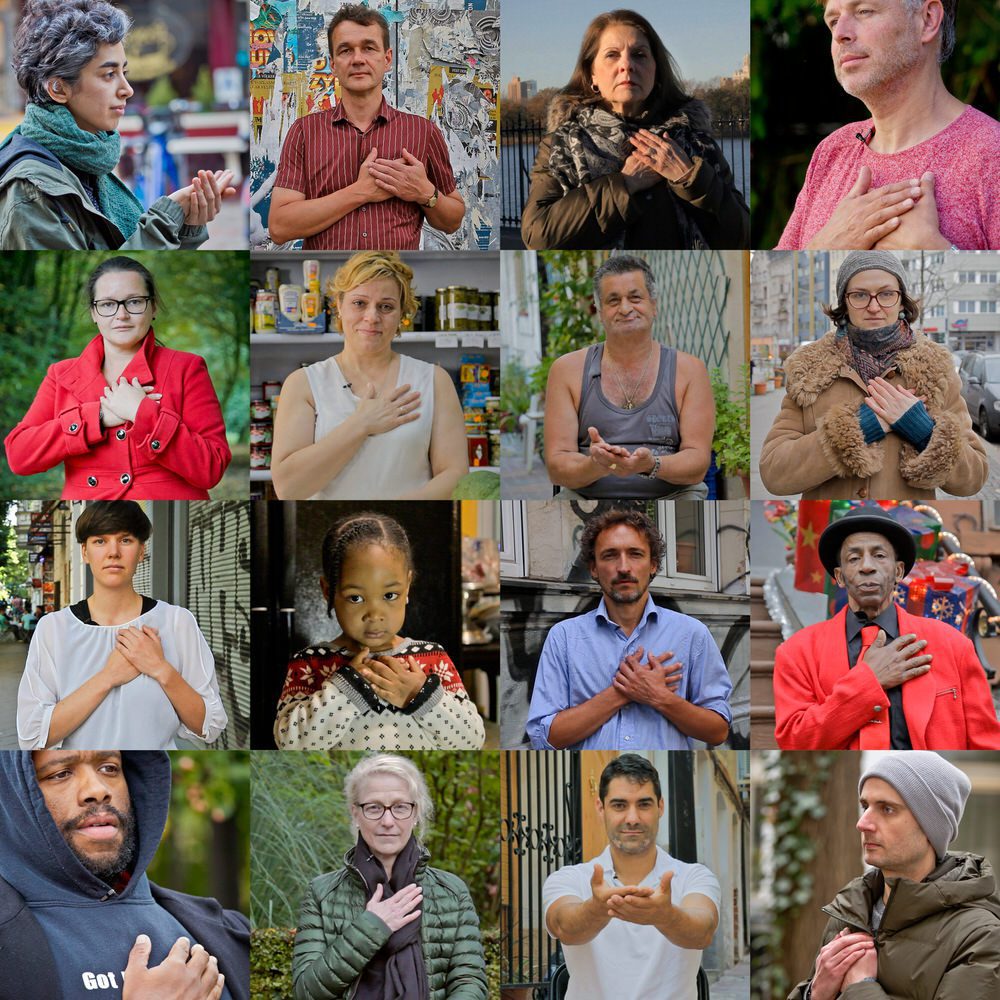
Films / Performance Artconnect reminds us of our own humanity by allowing us to see ourselves in others. Six films show a social and visual portrait of over 160 people of different ages, gender, socio-economic backgrounds, cultures and religion from local communities in the USA (New York City), Germany (Schöppingen, Berlin), and Spain (Blanca). The project presents stories and interactions that build intrigue about who we are and how we relate to one another. The protagonists share their private stories and thoughts in an honestly refreshing way, as they answer 5 universal questions that we all ask ourselves at one time or another. Each of these questions is the subject of its own film, with similar answers and counterpoints sewn together to build a narrative on humanity. These films are compelling and they draw us into the protagonists’ lives. Humans are curious by nature, so of course we’re interested in who these people are and what they do. The participants’ answers are so relatable or so unrelatable that we can’t tear ourselves away. Watching and listening to other people allows us to see ourselves in others and by doing so offers us a way to start connecting. The feelings driving the project are true connection and a universal love for others that is simply based upon our shared humanity. These feelings are present in all of the works by virtue of the protagonists’ generosity and honesty, and they are especially present in the film ‘gestures’, where each of us is unconditionally offered feelings of genuine warmth and love by over 160 people we don’t know. We may all be different but we all have the same core desires of love, peace, security and hope. We have much more in common than our differences suggest. The questions are: 1. What makes you happy?2. What are you scared of?3. What do you love the most?4. What advice would you give your younger self?5. What are your hopes for the future?get in contact Enquire about this work [...]
Films / Performance Art / PhotosThere is a sense of timelessness and harmony, as you watch over 30 people unite in movements to create a large human kaleidoscope. “connect: kaleidoscope” is a meditative work with an almost spiritual feel, that was performed under a huge copper beech tree on a meadow of grass and flowers on the grounds of a water castle. As raindrops fell on the faces of the performers, they shared in the unique experience of connecting with each other and the natural environment. The sentiment driving the work is connection. Connection between people and connection with the world we live in. Schwenk has created a body of work that re-presents these feelings for us to experience. Her two-channel film successfully creates a dreamy experience that transports us back into this performance and into a space of feeling calm and connected. An interactive installation expands the experience, allowing viewers to re-perform aspects of the performance while watching Drawings for the performance. The installation is made up of three viewing points that show five hand-drawn short films (2 to 6 minutes each) on small screens/ ipads with headphones. The viewing points are set up in ways to encourage people to lie down; kneel and stand, referencing the movements of the human kaleidoscope. The music and animation are hypnotic and mesmerising. Enquire about this work [...]
Films / Performance ArtOn a Saturday afternoon in Sydney a group of healthy people, including 2 children fell. They collapsed to the floor. Simultaneously. The fall happened during the opening of an art exhibition in Sydney Australia. The cause? A dada inspired work of socially engaged performance art directed by Sylvia Schwenk, performed by everyday people at Brenda May Gallery. This short film tells the story of this group of people who only met 30 minutes before the exhibition. What happened? “dada – when up is down” is made up of the performance, a short film that re-presents the performance and a series of photographs. Enquire about this work [...]
Films / PhotosWater ways is a film about human engagement and the waterways that connect a group of people. The film’s protagonists take us on a journey that transports us into the lives of a riverside community in Indonesia. We are given intimate observations and access to everyday people, their homes and things that are usually invisible to us, including their intrinsic connection to an environment that is both essential and harmful. We see a slice of everyday life, that starts with a group of children playing in the wash of a boat on a river. As the waterway divides, we follow the path to a tangle of boats that ultimately leads us to the main protagonist of the film, an older woman who shares her point of view with us. This woman absorbs the details of life around her from the edge of a timber mill, as she completes her morning rituals. She takes us into her world, a textured and fascinating place that we are invited to experience and marvel at. Enquire about this work [...]
Performance Art / PhotosResearch tells us that we laugh for less than 6 minutes a day. This is surprisingly only a third of the time people laughed in the 1950s, and we are correspondingly almost 20% less happy today than people were then. World Domination is a fun and playful work of art that encourages laughter, whilst parodying evil, greed and the desire to control the world. It is a nonsense. It is a silly and carefree project that is happy and evil, playful and scary all at the same time. World Domination aims to inspire happiness and laughter. It shows everyday people in ordinary spaces acting with playfulness, silliness and spontaneity, while the darker side to the work—the connotations of evil, greed, violence and dominance— act as a counterpoint. Perhaps it is the co-existence of these incongruous attributes that make the work so engaging. In the pilot of World Domination performed during peak-hour on a tram in Melbourne, Schwenk directed Movements of Laughter that saw a carriage full of passengers joining in with the silliness of the laughter. Laughter is contagious, once one person starts laughing, others quickly follow. This Pilot will be refined and further World Domination works will be performed and created. Enquire about this work [...]
Films / PhotosHow do you try to understand what life is like for someone working in the armed services, more specifically, for someone who is trained for warfare and combat situations. How do you ask personal questions of a person you know is trained to kill? With someone who—when they meet you for this first time—instinctively thinks about how they would disable you, if needed? And after having assessed this as being relatively easy, presents the Navy culture and persona they have been trained to present to outsiders. These are the questions Schwenk asked herself when she was commissioned to make art to celebrate the Royal Australian Navy’s 100-year anniversary of sailing into Sydney Harbour. As part of this commission, she stayed on the naval base at HMAS Penguin. This film featuring interviews, physical workouts and anecdotes succeeds in demystifying the Navy by breaking down some of the barriers that exist between elite Naval personnel and civilians. It shows the human side of the Navy, and invitingly allows people to access this closed culture through a side door. The work is anchored by the naval tradition of tattoos and gruelling physical training that uses rope. For the Navy, the rope is a symbol of union, mateship and stability. For the viewer, tattoos are symbols of humanity and individuality. Enquire about this work [...]
Performance ArtThe practice of painting naval ships with disruptive pattern camouflage known as “Dazzle”,was initially used 100 years ago in the First World War. Ships were painted in bold coloured abstract shapes and patterns, with areas of dark and light tones placed next to each other to break up the outline and shape of the ship when viewed from a distance. During an artist residency at the Naval base, HMAS Penguin in Sydney, Schwenk and Zahalka proposed to contemporise this naval history of camouflaging by creating a work of art made from human bodies. A study was done to present a side view of a naval ship covered in “Dazzle” camouflage on Middle Head Oval with military personnel and civilians lying down side by side. This socially engaged work of performance art was to have been filmed and photographed from a Navy helicopter Unfortunately the Australian Defence Forces did not have the resources to commit to the project. Enquire about this work [...]
Films / PhotosIn November 2011, as The Occupy movement in Canada celebrated its 2-month anniversary, Schwenk spent time with the movement in Victoria Square, in down-town Montréal. The resulting artworks show an alternate, positive view of Occupy, and not the violence associated with the eviction of the Occupiers, as was presented in the mainstream media. The Occupiers wanted to show people that there are other ways to organize society; and called on the world to eliminate economic inequality and redistribute resources from the 1% for everyone to share. We are the 99%. The bubble and other stories present stories about the everydayness and practicalities of people living together as a community in a protest environment. The project captures the celebration of Occupiers who tried to change the world. The film presents diverse subjects such as the indigenous homeless, graffiti and what the movement meant to some of the Occupiers. Filmed totally at nighttime, we see how relationships are built across people from varying backgrounds. The Occupiers strengthen the unity of the movement by singing and dancing together, and sharing in the making of beautiful bubbles using only the wind and a simple tarpaulin that envelops their bodies.
 Enquire about this work [...]
Books / Films / Performance Art / PhotosIn Launceston in late 2011 the public was allowed on to the field at half time during the regional Aussie Rules grand final. Kids kicked balls, little children and parents wandered around taking in the scene. Then something odd happened. Men, women and children dressed head-to-toe in white overalls jogged single file on to the grass. There was something disconcerting about their appearance, as though their costume was related to an emergency—a toxic spill, bomb threat or radiation leak—but their behavior was reassuringly playful. The white suited figures broke into groups and occupied different parts of the field, using their prone bodies to outline the markings for the goal square and goal posts. Beguiled by the performance kids and adults joined in. Eventually the white-suited performers occupied the centre square and, with the help of hundreds of football fans, completely covered the white lines marking its boundary. Along white lines was a performance staged by Sylvia Schwenk at Aurora Stadium during half time at the Northern Tasmanian Football Association Grand Final. Watching the video of the event one is struck by the good will of the crowd – as these odd, white-suited figures take their places and begin to form lines, bemusement turns to fascination – and then to participation. The low-key nature of the work seems to attract this good will and there is a festive air to proceedings. The relationship between the artist’s crew of 30 volunteer performers and the public becomes collaborative, the innocent action of lying on the ground one of definition. The football field is a codified space described by lines, distances and boundaries that, without the football teams, becomes a delimited space of possibility. Along white lines subtly reminds us of the structure of social relationships between artist, audience and setting but, more importantly, the work underscores the consensual nature of those relationships. Schwenk’s work is a democratic experience where every step of her process is open to the audience to engage, interact and direct the outcome. — Extract from Engage, explore and evolve by Andrew Frost Enquire about this work [...]
Films / PhotosTalking about death is difficult. And yet not talking about death can sometimes be more difficult. In her film, A shared space, Schwenk approaches the subject side-on by showing us death from the perspective of two grave diggers. Our protagonists have been preparing graves for more than 20 years, and for them death is a very normal part of life. They enjoy their job and take pride in burying the dead. The film starts by showing us a graveyard on a beautiful serene day. The birds are chirping and the sun is shining. The grave diggers work in a quiet and harmonious way and their movements almost seem choreographed as they prepare the burial site. Today, however, there is an unexpected outcome. Something the grave diggers have never experienced. There is another body buried in the plot they are preparing. The film takes an unexpected turn as we watch how the burial proceeds.get in contact Enquire about this work [...]
Films / Performance Art / PhotosSometimes awful things have their own kind of beauty is a project that tells stories about prisoners and people who were committed in mental asylums, in a beautifully simple, yet powerful way. These works consider spaces, lives and environments that are off limits to most of society. The artworks also reflect on the notion of what performance in the everyday means for those who live in a space where private and public co-exist, sometimes simultaneously. The first work of this project called, Sometimes awful things have their own kind of beauty, is a mesmerising film of a man Schwenk invited to perform in a maximum-security prison. The man dances with a lawnmower to the music of a harrowingly beautiful waltz, as he mows the lawn in an area surrounded by alarmed perimeter fencing and razor wire. The lawn is surrounded by 20 magnificent towering palm trees. It is an oasis in the maximum-security area of the prison, that offers a respite from the confinement of the prison cells and the cold metal surfaces and concrete of the prison. It almost seems surreal. The air seems sweeter and fresher here. The waltz is filled with hope but is underwritten with a score of despair. Enquire about this work [...]
Films / Performance Art / Photos / sculpturesbirds and clouds from one life to another by Sylvia Schwenk and Nikola Dicke references Bertolt Brecht’s poem The Lovers, that centres on the lives of a flock of cranes. In this art event, which took place in the German/Dutch border town of Bad Bentheim, German and Dutch model-plane pilots flew their planes as a group in a choreographed performance suggestive of the flight movements of a flock of birds set to music written for this performance. After the model plane performance the audience and pilots were invited to fold small origami cranes and build large origami crane sculptures, which were later carried over the airfield in a performance, also set to music. The event ended with a barbeque. Schwenk and Dicke’s approach to this project reflects social and political action, which uses an art framework that draws attention to and generates discourse on areas that create opportunities for inter-human relational practices. This form of artistic practice typically creates a social and spatial dynamic that rises to a climax during the art event and carries on beyond the public presentation of the project. Over 25 years ago1 the art historian Hal Foster describes such an approach as a new critical strategy of resistance from the inside. Schwenk and Dicke do not try to relocate artistic strategies in the real world, as Kontext Kunst did in the late 1980s and 1990s. Conversely they try to integrate reality into a themed art project in a way that decontextualises and recontextualises art, which is then later re-presented in the artworld. Schwenk and Dicke not only describe cultural, social and political practices, but focus–coherently and playfully at the same time–on reality, without submitting themselves to a stylistic realism. The nature of birds and clouds from one life is based on everyday routines that in a collective, mostly playful practice is given a new aesthetic quality. The final meaning of the work happens when the newly created actions are integrated into everyday life. birds and clouds from one life adopts a socio-political approach that simultaneously activates spatial and social processes and negotiates the political and aesthetic field. In this art project Schwenk and Dicke offer communication and interaction. It is about appreciating the whole project as an event. Art as a moment of revelation, not creating life through imitation or reflecting life’s context to represent content, but to be aware of the reality of life. Art not as a tangible physical representation, but as a way of thinking.2 1 Hal Foster, ‘Subversive signs’, in: Charles Harrison & Paul Wood (ed.), Art in Theory, 1900-2000: an anthology of changing ideas, (Malden, MA: Blackwell Publishers, 2003) 2 Also refer to Alan Kaprow: ‘The Happenings are dead – Long live the Happenings’, Artforum 4/7, New York, 1966 Enquire about this work [...]
Performance Art / PhotosIn silence and movement you can show the reflection of people, which takes its name from a quote by famed mime artist Marcel Marceau, Schwenk re-stages one of the most famous of all visual gags. Wearing bright yellow overalls with hardhats and suction pads, performers move large panes of non-existent glass back and forth among the milling crowds outside Sydney’s Museum of Contemporary Art, Sydney. Like walking against the wind or trapped in an invisible box this mime is so well known that it’s almost negated by its clichéd nature. Schwenk engages more than the recognition of a public audience of the conceit of the illusion, one that can only succeed through the assent of the audience, who became part of the performance. The audience started polishing the glass, some ran through sheets of glass smashing them into shards, while others simply joined in, and carried their own glass. This work was performed as part of Art Month Sydney, 2010 and adapted for a performance at Brenda May Gallery, Sydney in 2011. Enquire about this work [...]
Performance Art / PhotosIn slow-moving traffic in down-town Sydney, Australia, five teams of color-coded performers rolled car wheels in sets of four through city streets as though the car body had disappeared. This performance called Life takes place on foot provoked a sense of dismay that quickly turned into assent of the audience. The performance—occupying the space that would normally be used by five vehicles—gently and in a light hearted way posed the question, of whether roads should be turned over for people to use on foot, instead of being burdened by vehicles. In response, there was a sense of play shared by everyone using the road. The pedestrians, cars, and other vehicles —even huge cement trucks—took on caring roles and good naturedly shared the space with the pretend cars. Enquire about this work [...]
FilmsImagine what your life would be like if you were imprisoned. Not the fictionalized prison you’re shown on TV, but a real prison, a prison of the everyday. A prison of the minutia. A space where you lose your freedom of movement, your freedom of choice, your privacy and to a large extent your identity. five prison stories relays five stories about life in prison. It does so in an understated, matter of fact, yet private and sometimes almost humourous way. Schwenk gives us insight into a way of living and a space that most people have no exposure to, or experience with. The stories are told in the third person by a prison guard and are set against images and footage of the inside of a prison. The stories are: visiting you on table 33 They did have pottery and a kiln It’s not homosexuality. Its jail sex There was excessive use, not for the purposes they were intended. At least you are giving people contact. The film makes the inaccessible accessible in a simple and engaging way. This work is part of the larger project called, Sometimes awful things have their own kind of beauty that tells stories about prisons and people committed in asylums in a beautifully simple, yet powerful way. Enquire about this work [...]
FilmsSchwenk’s film is a work of images from an abandoned asylum for the mentally insane that is set to haunting music and sound. The film does not directly talk about the institution that was used from 1878 to 1914, nor of the horrors experienced by the marginalized–the mentally ill, disobedient or “promiscuous” women, victims of domestic and/or sexual abuse, the poor, and criminals— who were committed here, often for life. The film instead, is framed in a way that offers the foundations of a story about how people committed to an asylum were treated, which the viewer completes with their own constructed narrative. This work is part of the larger project called, Sometimes awful things have their own kind of beauty that tells stories about prisons and people committed in asylums in a beautifully simple, yet powerful way. Enquire about this work [...]
WritingAnja’s reality is a text-based work about Anja, (not her real name). Anja is a sex worker who offers drive-thru sex in the evenings in a designated Zone for sex work. In the Zone men can legally pick up a sex worker when a daytime two-way street is turned into a one-way circuit around the railway station and the Philip’s buildings in Eindhoven in the Netherlands. Women are only able to work here if they have a drug problem. The women must meet regularly with social workers who have an office in a 20ft container on site. The container has showers, condoms and tea-making facilities for the sex workers. Three Realities are presented in the work Anja’s the Caretakers’ and my reality (which serves as the reader’s view). The Realities are printed as text on clear Perspex, or directly on the wall, in a script as if taken from a typed record of interview. As the viewer stops to read, their silhouette is cast on the work imposing them directly into the trio of narratives. Enquire about this work [...]
Performance Art / PhotosX Performances utilises public space as a place of dialogue and negotiation. The public road is a space circumscribed by a social compact that determines interaction. But where the rules of the road are thought to be inviolable, X Performances humanises that space with a vulnerability that delays the enforcement of pure will or the law. X Performances is a series of performances that began in 2007. Colorfully costumed performers lie on the ground, solo or in groups, making an X with their bodies. The space for this action is typically a busy city street momentarily vacated of traffic when oncoming cars, buses and trucks are stopped by traffic lights. Before the lights change back to green, the performers get up and move quickly off the road. This work was staged in front of the Opera House in Ho Chi Minh City, Vietnam, Sydney’s busy central business district and outside Redfern Railway station in Sydney, Australia in 2007. In 2008, X Performances was performed in Cologne, Germany and in Dunedin in New Zealand 2009. Schwenk worked with the architectural firm, tonkin zulaikha greer in Sydney, on a submission for a public performative sculpture, based on a performance of X in the City of Perth. Enquire about this work [...]
Performance Art / PhotosRemember the importance of SELF is a project which seeks to remind us that each of us is important. And that who we are is more important than the gap which exists between the life we dreamt of and the life that we have. These artworks are intended as visual metaphors to address existential issues like inner balance. Art can serve to alter the way we understand the world. It can also be a source of solace. In the performance more than 30 people hold aloft three sumptuous purple cloths on poles to form a canopy or palanquin. The procession moves through the streets of Schöppingen in Germany. The performers raised palanquins over people they met, people who were going about their everyday activities. The performance bestows importance and shares moments of richness with people. There is a prestige and a moment of pageantry that injects something out of the ordinary into the known and the familiar. Remember the importance of SELF endows a sense of worth and inclusion. Enquire about this work [...]
Films / PhotosThe workers’ lift explores the hidden space occupied by workers in a large shopping centre in Cologne, Germany. The workers move between floors unseen by shoppers, using an exclusive private elevator that doesn’t have doors and never stops. The elevator is like a conveyor belt that continuously deposits staff throughout the building. The workers’ lift offers a peaceful and quiet mode of transport. It provides a moment of escape for the staff, as they occupy a hidden pocket of space away from the hectic noisy shopping environment that awaits them on the other side. The lift moves rhythmically, seamlessly and silently between floors in a steady loop. The workers glide on and off in concert with its flow. Person and machine engage in a form of a daily ritualistic dance where the basic step is so simple yet becomes bigger and more beautiful with repetition and isolation from the complexities of urban life. Enquire about this work [...]
Performance Art / PhotosOne day I think I’ll lend a hand, but right now I need a Plasma TV, is a performance that brings together the local community and refugees-seeking-asylum unified by a communal spirit of making art. A large group of everyday people all wearing red tops and black pants are positioned in a grid formation in an outdoor space. Together, they perform simple and repetitive synchronized exercises. The group performs as one, following the artist’s movement’s (also wearing red and black) in an exercise routine relayed to them via an old TV screen. The work focuses on the relationship between artist, performers and audience. This project was created by Schwenk in response to an observation of our cultures’ desire to, but our reluctance to change. We all know that the world isn’t quite the way it should be and we would like to help. Yet for many of us the timing isn’t right. We’re perhaps too busy, or just need to finish up doing something or buying something and then … and then we can get involved. The work also comments on our desire to perform as being normal, and fit in with society by following the trends, fashion and lifestyle that are projected to us on television. One day I think I’ll lend a hand, but right now I need a Plasma TV, was adapted and re-performed at the Sydney Artfair in 2009. Enquire about this work [...]
Performance Art / PhotosRed, blue or green? is a work of socially engaged performance art from Schwenk’s body of work with the heavily ironic title, Anything you can see in person, you can see better on TV. This project is a fun take on the spectacle and seeks to counter the belief that a televised image is better than being there in person. In Red, blue or green? a group of everyday people come together to make geometric patterns with their bodies. The performance, directed by Schwenk, takes place in the middle of the road at Bondi Beach in Sydney. The work is timed to happen during a busy part of the day. The participants in the work are invited to wear their choice of red, blue or green T-shirts, together with black pants and shoes. The colors people choose to wear, will determine the geometric shapes made during this performance. Schwenk finalizes the patterns and choreography for the intervention once everyone arrives. At first she is aware of nothing beyond her own body, her self, and she watches other people, imitating the way they hold their arms. But she’s also aware that she’s doing a strange and unbelievable thing. It makes her feel entirely alive, in the roof of her mouth and fingertips. She understands all at once, with a small shock … being there is not the same as watching.1 1 Kingsolver B, Pigs in Heaven, New York, Harper Collins Publishers Inc, 1993, p270. There is adrenaline, excitement and importantly relationship building as the performers rely on each other to create these beautiful geometric shapes. Enquire about this work [...]
Films / Performance Art / PhotosEveryday people dressed in black with high visibility vests marked Under Surveillance, wearing name badges with only a barcode and number, perform as Officials conducting surveillance. This art intervention masquerading as a real everyday event, took place in Martin Place at lunchtime during a working day in Sydney, Australia. In Under Surveillance, the performers photograph and film people in public to stimulate awareness of the level of surveillance our society is subjected to. The performers invade people’s personal space. They very visibly record what people eat, what they say, what they do and who they associate with. If the public complain about the surveillance or the invasion of their privacy, they are given a card with only a telephone number they could call to discuss their concerns. No one asks why they are under surveillance, or what would happen to their image. Schwenk wants to prompt thought about what the loss of privacy and loss of freedom that accompanies heightened scrutiny means. From the response to this intervention, it seems that as early as 2007, we have been desensitised to our loss of privacy in public space. It’s accepted as just something else that we have no control over. Enquire about this work [...]
Performance Art / Photos / sculpturesBoots for Rising Waters is the latest footwear designed by Sylvia Schwenk for the upcoming season of climate change. They are a stylish blue and black high-platformed-gumboot. The glossy black stacked soles of the Boots range in height from 10 to 30 cm. This allows the wearer to select a height appropriate for the days level of flooding. Helpers must assist the wearer of the shoes to walk. A sign that raises the question of whether only the wealthy can adapt to climate change? Boots for Rising Waters premiered as a performance of a fashion show on the stairs of the Dom Cathedral in Cologne. In the performance, nine women. assisted by their helpers, model the Boots. The stairs function as a fashion-runway and the everyday users of the public space as the audience. The participants precariously ascend the rising levels of the steps with decreasing mobility. They ultimately cluster at the doors of the cathedral, seated with their feet protectively drawn up against the tide. This work was adapted and performed at the Blue Oyster Gallery, Dunedin, New Zealand in 2009 and at Artereal Gallery, in Sydney Australia in 2010. Boots for Rising Waters with their exaggeratedly raised platforms are a humorous, baroque theatricalization of an issue of great seriousness. This work is part of a larger series about environmental concerns called, They paved paradise, put up a parking lot.1 1 Joni Mitchell, “A big yellow taxi”, 1970 Enquire about this work [...]
Performance Art / Photos / sculpturesLife preservers is from a body of work called, They paved paradise put up a parking lot, which showcases Schwenk’s latest footwear and dresses for the upcoming climate change season. Walking through the streets, a group of women use the city of Cologne as their fashion runway, modelling a series of dresses made with plastic bottles called, Life preservers. As it was raining on the day of the performance the women used matching red umbrellas, which gave them a more striking presence in the grey urban streets. Life preservers plays on an amusing, imaginary double-bind based on the extremes of climate change: to fill the bottles would be good for drought but would make one sink in the event of a flood, and vice versa. Through this performance, Schwenk playfully prompts people to openly think about what climate change means. They paved paradise put up a parking lotWith a pink hotel, a boutique, and a swingin’ hot spotDon’t it always seem to goThat you don’t know what you’ve got ’til it’s goneThey paved paradise put up a parking lot1 For all its serious and considered social comment, there is light-heartedness that pervades Schwenk’s work. But light-heartedness should not be confused with irresponsibility. Rather it is an irony that belongs to art that can easily oscillate between the need to speak out over unfortunate state of affairs, and the triumph of being able to find a solution, however far-fetched. These are strategies that have a long and exalted history. Schwenk’s interventions can be traced back to the theatrical exercises of Émile Jacques-Dalcroze and Berthold Brecht. Dalcroze dispensed with the proscenium arch, the barrier between actor and audience that acted as the signifying threshold between reality and the theatrical imaginary. With this gone, theatre no longer needed to give the illusion of life, but rather it could revel in its many devices and subterfuges, drawing attention to them. Brechts Verfremdungseffekt was an antidote to a much more insidious social alienation brought about by the false consciousness that everything is what it appears to be. The exaggerations and at times heavy-handed formalisations of such theatre were used to jolt audiences out of the former lethargy. In the same vein, Schwenk’s works function as a kind of galvanic spark that seeks to alter the viewer’s point of view, at least in some small, but lasting, way. — Extract from “Social Exchange and Life” by Adam Gezcy 1 “Big yellow taxi” —Joni Mitchell Enquire about this work [...]
GemäldeSylvia Schwenks Projekt aus der Pandemiezeit—ein Ensemble von Gemälden auf Papier mit dem Titel “your thoughts become your world”—beginnt mit einer Vielzahl von Bildern. Sobald man einige davon gesehen hat, stellt man unweigerlich Beziehungen zwischen ihnen her, auch wenn jedes einzelne für sich bleibt. Und wer mehr von ihnen gesehen hat, weiß, dass sich diese Wahrnehmung fortsetzt, da mehr Beziehungen und mehr Unterscheidungen ins Spiel kommen. Und doch scheint die Entfaltung dieser Ähnlichkeiten und Besonderheiten weder zufällig noch unendlich zu sein. Wenn man von einem Gemälde zum nächsten geht, es vergleicht und kontrastiert, muss man sich an das erinnern, was man bereits gesehen hat, und vorhersehen, was als nächstes kommen könnte. Wenn Sie ehrlich sind, werden Sie nicht vorschnell zu dem Schluss kommen, dass alles gleich aussieht oder dass alle Unterschiede bedeutungslos sind. Ebenso ist es eine Frage der Fairness, dem Werk Aufmerksamkeit zu schenken: Nur dann werden Sie sehen, dass die Bilder nicht einfach miteinander in Beziehung stehen, sondern dass sie übereinander nachdenken, und es ist Ihre Aufgabe, dies geschehen zu lassen Genauer gesagt reflektieren die Bilder übereinander (und alles dazwischen) nach einem Prinzip der “Gleichheit”, das sich in sinnlichen und abstrakten Begriffen zugleich ausdrückt. Sie befragen sich gegenseitig nach ihren eigenen Möglichkeiten, sie untersuchen ihre Ungleichheiten aus allen Blickwinkeln, sie machen alle Kräfteverhältnisse umkehrbar und sie widersetzen sich geduldig jeder Begrenzung ihres Horizontes. Sie illustrieren diesen Sinn für Gleichberechtiung nicht, erist ihnen immanent. Der Titel des Projekts muss in beide Richtungen gleichzeitig gelesen werden, denn die ganze Handlung spielt sich um das Wort „werden“ herum ab. Für Philosophen ist „werden“ nicht nur ein Begriff für Veränderung, sondern er definiert die Existenz selbst als Veränderung. „Du musst dein Leben ändern“, sagt Rainer Maria Rilke; „du musst die Welt ändern“, sagt Karl Marx, und beide mögen recht haben. Aber dazwischen gibt es viele Wege, einige davon führen zu dem, was als „du“ gilt, und einige führen von ihm weg. Mitten in diesem Geflecht sind die gewohnten stabilen Bezugspunkte (wie „Ich“, „Gesellschaft“ und „Umwelt“) außer Kraft gesetzt, und es ist notwendig, sich nach einem dynamischeren Koordinatensystem zu orientieren. Wie sieht das aus? Wie fühlt sich das an? Schwenks Projekt zeigt uns einen Weg, diese Fragen zu beantworten. Das heißt nicht, dass sich das Projekt nicht auch mit den großen Fragen unserer Zeit befasst – den täglichen Bedrohungen unserer Existenz, der rassistischen und sexuellen Unterdrückung, der globalen ökologischen Krise -, sondern im Gegenteil, es besteht darauf, dass man sich solchen Fragen nähern kann, indem man lernt, die irreduzible Vielfalt der Beziehungen zu erkennen und zu antizipieren, die direkt vor uns liegen und uns ins Gesicht sehen. Es liegt an uns, einen Blick darauf zu werfen. — Auszug aus Abstraktion und Gerechtigkeit: Sylvia Schwenk, “your thoughts become your world” (2020-ongoing von Richard Dienst) Kontakt aufnehmen [...]
Filme / Performance KunstDie „Bibliothek der Emoji-Kunst“ ist ein groß angelegtes, auf Gemeinsamkeit basierendes öffentliches Kunstprojekt, das „emoji-art“ zeigt, die von Gruppen auf der ganzen Welt zu verschiedenen Zeiten und als Reaktion auf unterschiedliche Themen geschaffen wurde. Jedes Werk der „emoji art“ ist ein ortsspezifisches Werk sozial engagierter Performance-Kunst, das die Identität der teilnehmenden Städte und Gemeinden widerspiegelt. Bei jeder Performance bringt Schwenk Hunderte von Menschen zusammen, um sich zu verbinden und miteinander zu kommunizieren, während sie mit ihren Körpern großformatige Emojis kreieren. Das Emoji wird von der Gemeinschaft in einem oder mehreren Workshops entworfen und dann als Performance-Kunstwerk mit den Körpern der Teilnehmer*innen präsentiert, die aus allen Bereichen des Lebens kommen, z. B. aus Altersheimen, Schulen, Feuerwehren, der Polizei, Kirchengruppen, Unternehmen, Musikgruppen und Sportgruppen. Um die einzelnen Projekte auf der ganzen Welt miteinander zu verbinden, kombiniert Schwenk jede Performance von “emoji-art” mit der Performance eines der beliebtesten Emojis des Jahres. „Emoji art“-Performances sind lustig, spektakulär und voller Bewegung. Die Teilnehmer*innen erwecken Emojis mit ihrem Körper zum Leben, indem sie stehen, sitzen, knien, gehen, die Arme ausstrecken, lachen und/oder sich auf den Boden legen. Emojis sind in unserem mediengesteuerten Zeitalter ein wesentlicher Bestandteil der Kommunikation. Die Erstellung analoger Versionen dieser digitalen Symbole hilft, der Isolation entgegenzuwirken und macht es einfacher, in der physischen Welt miteinander in Kontakt zu treten. Die „emoji art“ bleibt auch nach der Performance erhalten und kann von den Performer*innen und anderen genutzt werden. GIFs und Fotos der „emoji-art“ Performances werden zusammen mit Zeichnungen aus den Workshops und Archivmaterial wie Radioberichten und Social-Media-Posts in der „library of emoji art“ hinterlegt. Kontakt aufnehmen [...]
Filme / Performance Kunst„Connect“ erinnert uns an unsere eigene Menschlichkeit, indem wir in die Lage versetzt werden, uns selbst im Anderen zu sehen. Sechs Filme zeigen ein soziales und visuelles Porträt von über 160 Menschen unterschiedlichen Alters, Geschlechts, sozioökonomischen Hintergrunds, Kultur und Religion aus lokalen Gemeinschaften in den USA (New York City), Deutschland (Schöppingen, Berlin) und Spanien (Blanca). Das Projekt präsentiert Geschichten und Interaktionen, die Aufschluss darüber geben, wer wir sind und wie wir miteinander in Beziehung stehen. Die Protagonist*innen teilen ihre privaten Geschichten und Gedanken auf eine erfrischend ehrliche Art und Weise, während sie 5 universelle Fragen beantworten, die wir uns alle irgendwann einmal stellen.* Jede dieser Fragen ist Gegenstand eines eigenen Films, wobei ähnliche Antworten und Kontrapunkte zu einer Erzählung über die Menschheit zusammengefügt werden. Diese Filme sind fesselnd und ziehen uns in das Leben der Protagonist*innen hinein. Der Mensch ist von Natur aus neugierig, also interessiert es uns natürlich, wer diese Menschen sind und was sie tun. Die Antworten der Teilnehmer*innen sind uns so nah oder auch so fremd, dass wir uns nicht losreißen können. Wenn wir anderen Menschen zusehen und zuhören, können wir uns selbst in diesen wiedererkennen und so eine Verbindung aufbauen. Die Gefühle, die dem Projekt zu Grunde liegen, sind wahre Verbundenheit und eine universelle Liebe für andere, die einfach auf unserer gemeinsamen Menschlichkeit beruht. Diese Gefühle sind durch die Großzügigkeit und Ehrlichkeit der Protagonist*innen in allen Werken präsent. Besonders präsent sind sie in dem Film „Gesten“, in dem jedem von uns von über 160 Menschen, die wir nicht kennen, bedingungslos Gefühle echter Wärme und Liebe entgegengebracht werden. Wir mögen alle unterschiedlich sein, aber wir haben alle die gleichen Grundbedürfnisse nach Liebe, Frieden, Sicherheit und Hoffnung. Wir haben viel mehr gemeinsam, als unsere Unterschiede vermuten lassen. * Die Fragen sind: Was macht dich glücklich?Wovor fürchtest du dich?Was liebst du am meisten?Welchen Rat würdest du deinem jüngeren Selbst geben?Was sind deine Hoffnungen für die Zukunft? Kontakt aufnehmen [...]
BücherSchwenk ist nicht nur Künstlerin, sondern auch Wirtschaftsprüferin und wurde angeworben, um für den öffentlichen Dienst an einem milliardenschweren Projekt zu arbeiten. Sie schrieb ein lustiges, aber zugleich trauriges Sachbilderbuch für Erwachsene über den Alltag in dieser Zeit. Das Buch mit dem Titel „absurdity“ ist eine Sammlung von Geschichten, Zeichnungen und Beobachtungen. Man kann einzelne Geschichten lesen und im Buch hin und her springen oder das Buch von Anfang bis Ende lesen. Jede Geschichte hat ihr eigenes Bild, das in der Regel eine Zeichnung auf Papier ist, die mit „Textas“ (Faserstifte, die typischerweise von Kindern verwendet werden) angefertigt wurde. Es gibt keine großen Ereignisse, die im Mittelpunkt stehen. Ebenso gibt es keine traditionelle Geschichte oder Handlung, der du folgen oder in die du flüchten kannst. Es gibt keine Hauptfiguren, sondern Menschen, die auf- und wieder abtreten. „absurdity“ ist ein Werk über das menschliche Befinden, das den Kleinigkeiten — die unterschwellig den Alltag bestimmen — einen Spiegel vorhält. Schließlich spielt sich das Leben im Detail ab. Kontakt aufnehmen [...]

Stay connected

New works, exhibition news, and occasional notes from the studio

[mc4wp_form id=1149]